

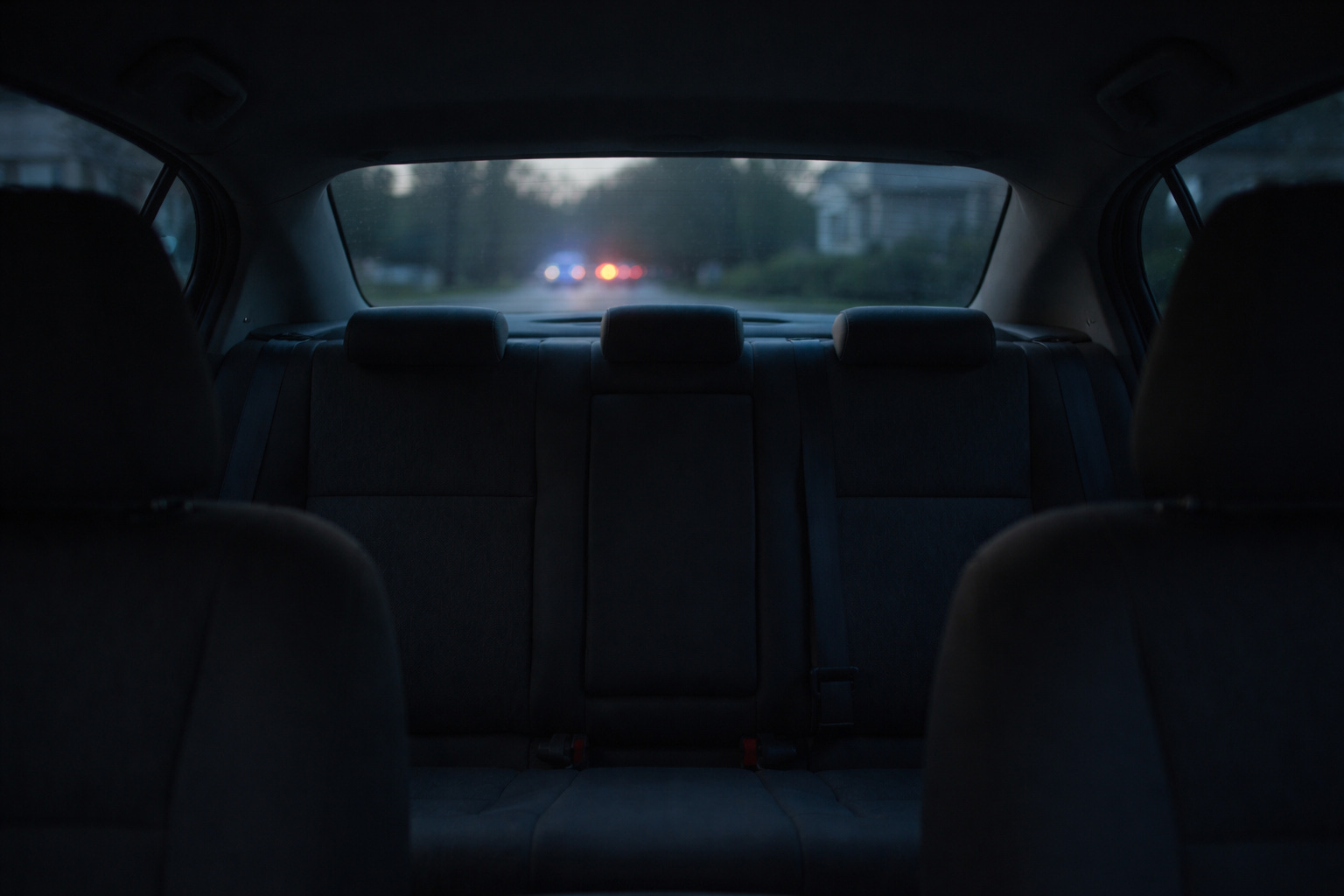
I remember with sharp clarity the moment we pulled into our driveway—my wife beside me, my daughter in the back seat. The house was already surrounded by police. We knew why they were there. We had just watched our sixteen-year-old son taken away in handcuffs. I thought I had more time.
Before we stepped out of the car, I turned around to face my daughter. I chose my words carefully, the way parents do when they are trying to protect what can no longer be protected. I said, “Your brother was involved.”
She understood immediately. There was no confusion, no question. She began to scream from somewhere deep inside herself, over and over again: No. No. That’s not right. Something’s wrong. Her voice filled the car—raw and uncontained—refusing the reality I had just placed in her lap.
She was thirteen.
That car ride is where my life split into “before” and “after.” Not because I didn’t already know something terrible was happening, but because I had to place that reality into my daughter’s hands. That was the moment I felt—viscerally—that what happened would not be contained. Harm radiates. It moves outward into other lives, other families, other futures. Those lives deserve the first place in any telling.
Before anything else: there are people and families who carry the permanent cost of what happened. Nothing I write will ever balance that scale. Nothing I write is meant to compete with their grief, their memories, or their right to be heard. If I am going to speak at all, it has to be with restraint. It has to refuse spectacle. It has to put dignity before detail.
Victims first. Always.
As I write this, a documentary series about the case is nearing release. I can’t control what the world emphasizes once a story becomes public property. I can only control what I do with my own voice. I’m not writing to review a series or to rebut a title. I’m writing from the aftermath—from the place where the consequences live long after the cameras are gone.
When the producer first reached out, I answered as simply as I could: If it may reduce suffering, I’m in 100%. I still mean that.
I also know what I will carry forever. I was gone—traveling more than I needed to, mistaking provision for presence. I gave my family money, but I did not give them enough of me. I don’t offer that as an explanation, and I don’t offer it to soften what happened. I name it because it is part of the truth I live with, and because other parents may recognize the same temptation to be absent in ways that feel responsible at the time.
There is a limit to what a parent can say without drifting into justification, and I won’t cross it. I can’t rewrite the past, and I can’t claim certainty about an alternate life. I can only witness what is true for me now: presence matters, and absence carries a cost that is not always visible when you’re living it.
My son has wanted for years to share something simple and unsensational: a message aimed at kids who feel unseen—kids struggling for purpose and identity, kids who drift into fantasy because reality feels unbearable. He has been interviewed before, and he believes most of that message is often left out. I’m not here to speak for him. I’m here to make room for his words—carefully, without monetization, and with the understanding that nothing he says can undo what happened.
What follows are his words, in his voice. They are not an explanation. They are not a plea. They are offered as a warning.
Brian Draper — Entry 1
(in his own words)
Hey Everyone, my name’s Brian and I’m Kerry’s son. In February Disney+ will be releasing a three-part docu-series on the case. As with the “Explore With Us” and “Dateline” projects, I agreed to be interviewed because I have a message that I would like to share with everyone. I know that there are kids out there in free society who are struggling with the same things I did, struggling to make sense of their lives and how they fit into the world around them. They’re struggling for purpose, for identity. Some just want someone to notice.
For the most vulnerable, the ones who are more desperate, more anguished and lost, for the ones most like the kid I was, they drift into fantasy — and lose themselves there. These kids are in desperate need of a message that doesn’t glorify violence or substantiate anti-hero fantasies, a message of hope, purpose, positive inspiration, of reason, a message that grounds them in reality and illuminates the truth of what they’re feeling and experiencing. Too many of these kids are slipping into the same roles, following each other down that dark path that leads them, in increasing levels of angst, to their own destruction and to the destruction of others.
I’m not all-knowing. I don’t have all the answers, or all the solutions. I’m not in possession of some panacea that will cure the world of youth violence. But I’ve been there. I’ve lived it. And it led me to making the worst decision of my life. I have a message I’d like to share, and every time I share it, true-crime producers leave 95% of it out of the final edit. Evidently, they don’t feel that it’s sensational enough, not entertaining enough; or maybe it just didn’t fit their narrative.
This blog is my way of sharing all that I’d like to share — my message, my stories, and my experiences from my 20 years in prison.
Thanks guys,
Brian Draper
When I return to that day, I don’t return first to the police cars or the noise outside our house. I return to the inside of a car—to a sentence I had to say, and to a child’s voice refusing a reality she never asked for. That is where responsibility lives for me now: not in certainty, not in resolution, but in witness.
I don’t know how what’s coming will be received. I do know what I owe: restraint, honesty, and a refusal to turn suffering into entertainment. If there is any good that can come from speaking at all, it will come from choosing reality over fantasy, presence over distance, and care over spectacle.
Victims first. Always.
As alway, here with support. I remember vividly the angst you lived through as this reality unfolded in you lives.
Just watched the doc and was moved by you, Kerry. I literally googled the phrase, “I want to give Kerry Draper a hug” 😅 and your substack came up. I’d love to hear more of your journey. Your heart is so clearly big and pure. You have a voice and a story and should absolutely share it. One of the best books I ever read was Sue Klebold’s book about her son and Columbine. It’s such an overlooked voice…the voice of those who care/cared for these troubled kids. Its colors the overall picture and keeps it from being so black and white. We must move to understand more, as our kids disappear further into fake worlds created and curated for them by machines. I encourage you to keep going! I’m praying for you and your family. By the way, I’m also a Draper!